
“Do I need ballroom shoes or Latin shoes?” is the question we answer most often across the fitting bench at our Ottawa and Montréal showrooms. The two look similar on the shelf, but they’re built for different jobs — and dancing in the wrong type makes technique harder than it needs to be. Here’s how to tell them apart and choose the right pair.

The quick answer
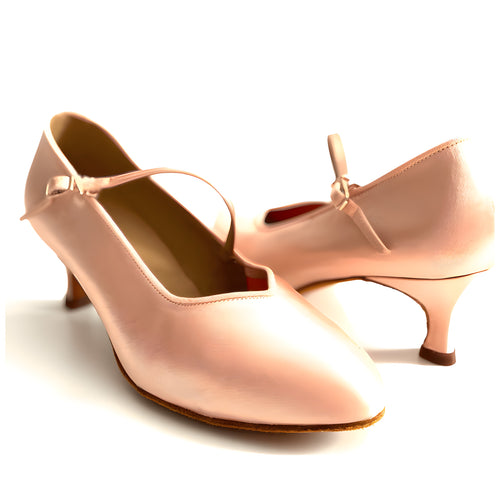
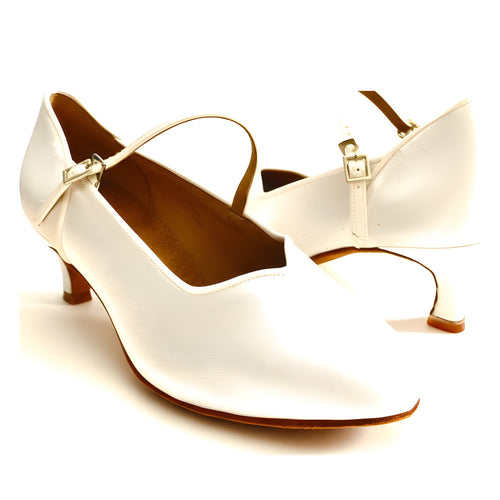
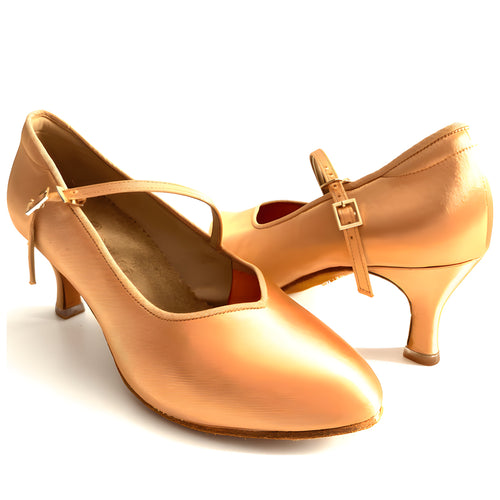
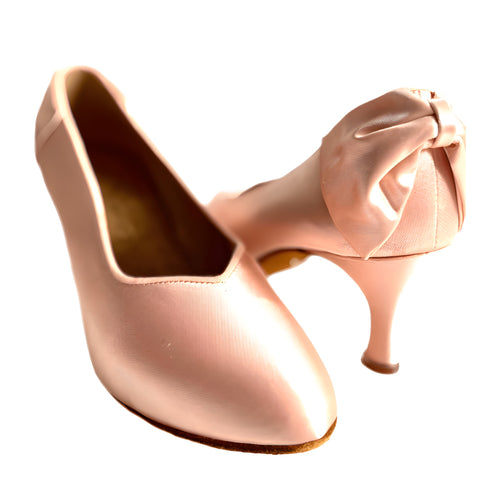
Ballroom (Standard/Smooth) shoes — waltz, foxtrot, tango, quickstep, Viennese waltz — are built for smooth, gliding travel: a closed toe, more foot coverage, and a lower, stable heel that keeps you grounded. Latin shoes — cha-cha, rumba, samba, jive, salsa, bachata — are built for sharp weight changes and articulation: more open, more flexible, with a higher heel set further forward to push your weight onto the ball of the foot.

Heel: height and placement
Ballroom heels are lower and centred under the foot for balance during long, travelling movements — typically around 1.5″–2″ for women, and a low Cuban heel for men. Latin heels are higher and angled forward (commonly 2.5″–3.5″), deliberately tipping your weight onto the balls of your feet, which is where Latin technique lives. If a shoe’s heel feels like it’s pitching you forward, that’s a Latin shoe doing its job — not a fault.

Sole and flexibility
Latin shoes flex more through the arch so you can point, articulate and roll through the foot. Ballroom shoes are a touch more supportive and structured for control at speed. Both use a suede (chamois) sole for the grip-with-slide you want on a wood or sprung floor — see our note on caring for suede soles so they last.

How each should fit
Both fit far closer than street shoes, but Latin shoes are fitted especially snug — your toes should sit right at the edge of the sole so the foot doesn’t slide forward when you’re on the ball of the foot. Ballroom shoes are still snug but give a little more coverage and security for travelling steps. New leather and satin ease slightly with wear, so “snug but not painful” is the target. Full details in our fit & sizing FAQ.
Which do you actually need?
- Standard/Smooth dancer (waltz, foxtrot, tango, quickstep) → ballroom shoes.
- Latin/Rhythm or social dancer (cha-cha, rumba, samba, jive, salsa, bachata) → Latin shoes.
- You do both (Ten-Dance / social all-rounder) → most dancers eventually own a pair of each, but if you’re starting out, buy for the style you dance most. Some social dancers use a lower “court” Latin shoe as a versatile in-between.
- Just starting / doing group classes → a lower heel and a practice shoe are a comfortable, forgiving place to begin.
Where to start
Browse our ballroom dance shoes (Standard) and Latin dance shoes, men’s options in men’s ballroom & Latin shoes, or explore the International Dance Shoes range we carry. If you’re between styles or unsure of size, book a fitting at our Ottawa or Montréal showroom — we’ll get the type, heel and size right for how you dance.
Frequently asked questions
What is the difference between ballroom and Latin dance shoes?
Ballroom (Standard) shoes have a closed toe and a lower, stable heel for smooth travelling; Latin shoes are more open and flexible with a higher heel set forward for sharp weight changes.
Can I use Latin shoes for ballroom (or the other way round)?
For social dancing you can get by, but each is built for its job — the heel height and toe shape differ — so serious dancers use the right shoe for the style.
Do I need both ballroom and Latin shoes?
Many dancers eventually own a pair of each. If you’re starting out, buy for the style you dance most.
Which is better for beginners?
A lower heel or a practice shoe in whichever style your class focuses on — stability first while you learn.
Written by Olga and the Wedance fitting team. Olga has fitted dancers for several years and coaches Anna, who fits at our Montréal showroom. We fit dancers face-to-face at our Ottawa and Montréal showrooms — so this guide reflects real fittings, not a spec sheet.