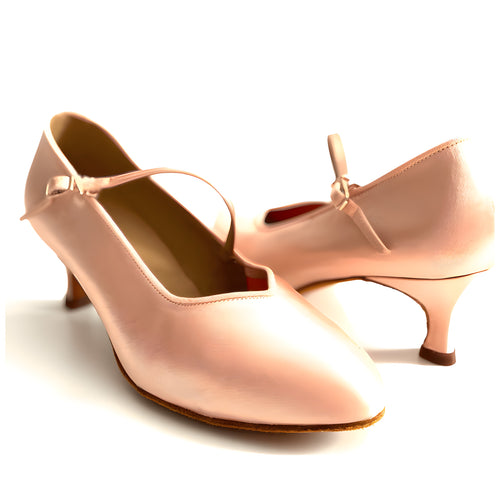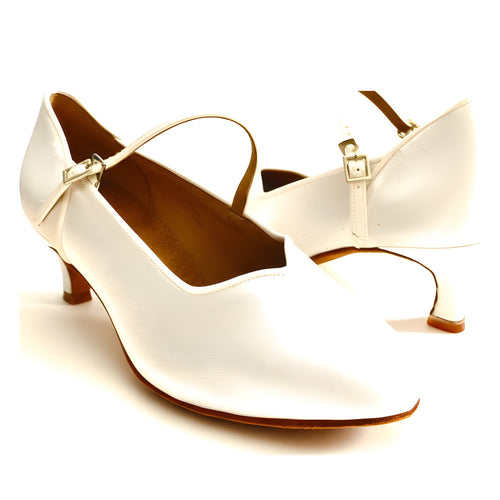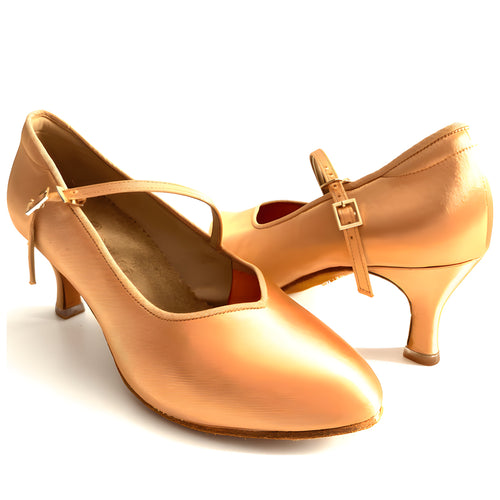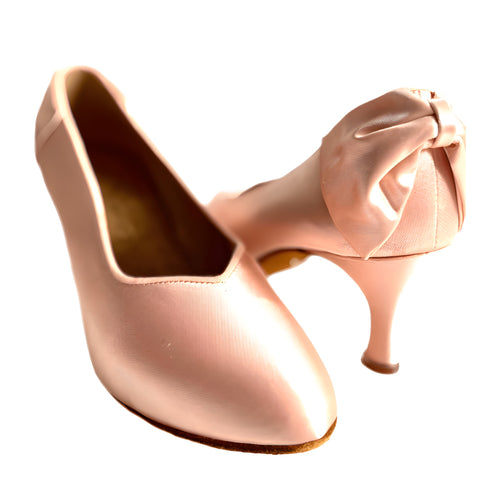

New dance shoes feel snug by design — but there’s a right way and a wrong way to break them in. Do it well and they mould to your foot; get it wrong and you’ll be in pain or stretch them out of shape. Here’s how we advise dancers at our Ottawa and Montréal showrooms.

How dance shoes break in
Leather and satin ease slightly with wear as they warm and mould to your foot. A little snugness in a new shoe is normal and settles within a few wears — “snug but not painful” is the target. Suede soles also need a brush and a few sessions to reach their best grip (see our care guide).

How to break them in safely
Wear them for short sessions at home or at practice before a full night of dancing. Thin socks help at first, and dancing on a clean indoor floor lets the sole and upper settle together. Don’t rush it — a few short wears beat one painful marathon.

Stretching tight spots
If one spot pinches, a gentle stretch can help — but go easy: over-stretching ruins the fit and the shape. For satin especially, less is more. A specialist or cobbler can stretch a genuine pressure point safely; forcing it at home often does more harm than good.

Pain is not part of breaking in
Mild snugness eases; pinching, numbness, or a heel that slips out does not. Those mean the size or shape is wrong, not that you need to push through. Check our fit & sizing guide — and if a shoe is simply too narrow, see wide-fit dance shoes.
If they’re truly the wrong size
No amount of breaking in fixes the wrong size. If in doubt, get measured: book a fitting in Ottawa or Montréal and we’ll confirm the fit before you commit to breaking them in.
Written by Olga and the Wedance fitting team. Olga has fitted dancers for several years and coaches Anna, who fits at our Montréal showroom. We fit dancers face-to-face at our Ottawa and Montréal showrooms — so this guide reflects real fittings, not a spec sheet.