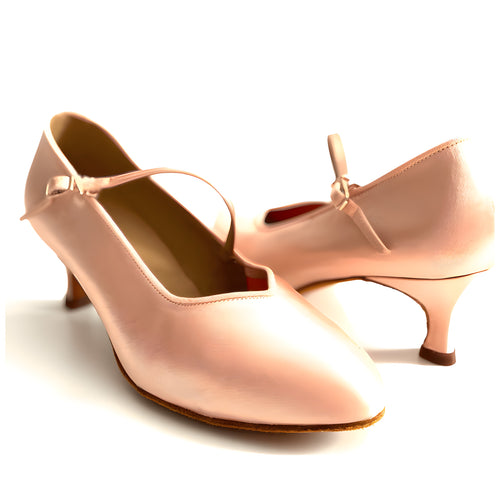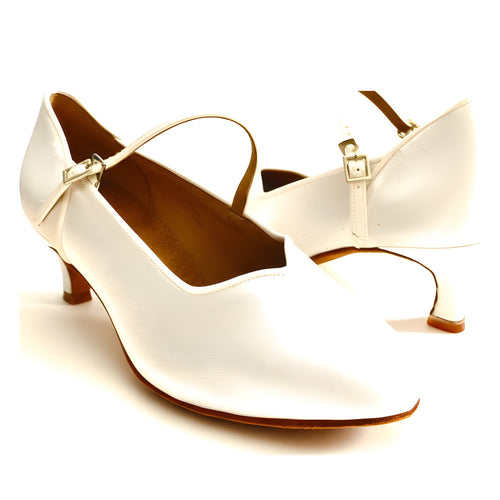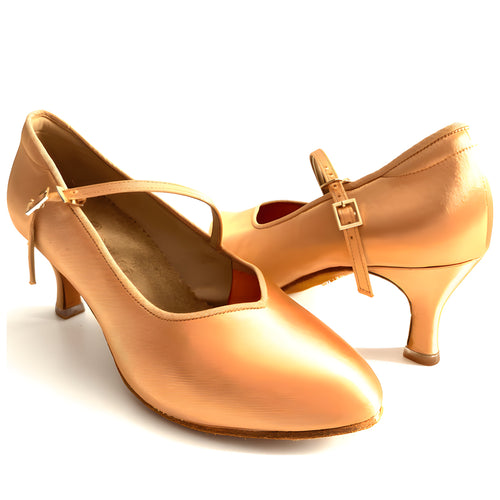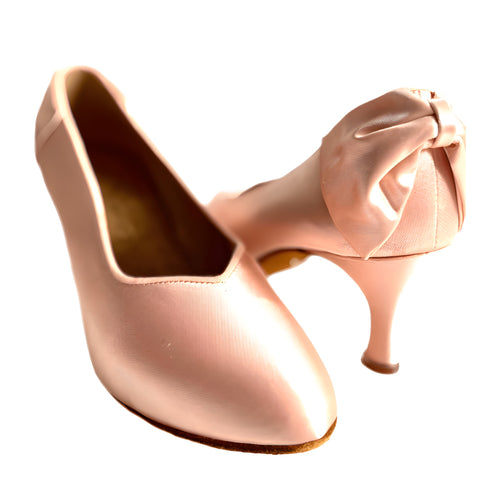

Heel height and shape change how a dance shoe feels, balances and performs — and choosing well is the difference between dancing on your shoes and fighting them. Here’s a plain-language guide to dance-shoe heels, from the team that fits dancers in Ottawa and Montréal.

Heel heights, roughly
Heights are usually given in inches or centimetres, measured at the back of the heel:
- Practice / flat (approx. 1″–1.5″ / 2.5–4 cm) — stable and comfortable for classes, teaching and long sessions.
- Low (approx. 2″ / 5 cm) — the most popular starting height for ballroom and beginners.
- Standard Latin (approx. 2.5″ / 6.5 cm) — the everyday Latin height for most social and competitive dancers.
- High (3″+ / 7.5 cm+) — a performance look that demands strong ankles and practice.

Heel shapes (just as important as height)
- Slim / stiletto — an elegant Latin look; less base, so more balance required.
- Flare — flares out at the bottom for a larger contact patch and more stability at a similar height — a great middle ground.
- Cuban / block — a wider, sturdy heel used for men’s Latin, some social styles, and practice shoes; very stable.
- Court heel — a lower, everyday-style heel on some social and smooth shoes.

Ballroom vs Latin heels
Ballroom (Standard) heels are lower and set under the foot for balance during smooth, travelling movement. Latin heels are higher and placed further forward to shift weight onto the ball of the foot, which is where Latin technique lives. If you dance both, you’ll likely want a different heel for each — more on that in ballroom vs Latin shoes.

Choosing by experience
Beginners are almost always more stable, and progress faster, in a lower heel — start around 2″ (or a practice shoe) and work up as your ankles and technique strengthen. A heel you can genuinely balance on beats a taller one you can’t. Height is a preference and a look, not a skill level.
Men’s heels
Men’s ballroom shoes use a low (about 1″) heel for stability, while men’s Latin shoes use a slightly higher Cuban heel (around 1.5″–2″) to bring the weight forward. See men’s ballroom & Latin shoes.
Comfort and stability tips
- Choose stability over height while you’re learning — a flare heel is a smart compromise.
- Make sure the shoe fits snugly first; a loose shoe feels far worse in a higher heel.
- Build up to taller heels gradually as your strength improves.
Find your heel
Browse heights and shapes in our Latin dance shoes & heels and ballroom dance shoes, or start comfortable with a practice shoe. Not sure what suits you? Book a fitting in Ottawa or Montréal and try a few — the right heel becomes obvious the moment you stand in it.
Frequently asked questions
What heel height should a beginner dance in?
Start around 2″, ideally a flare shape for stability — or a practice shoe. A heel you can genuinely balance on beats a taller one you can’t.
What is a Cuban heel?
A wider, sturdy block heel used for men’s Latin, some social styles and practice shoes. It’s very stable and sits lower than a slim Latin heel.
What heel height is best for Latin vs ballroom?
Latin heels are higher (about 2.5–3.5″) and set forward onto the ball of the foot; ballroom heels are lower (about 1.5–2″) and centred under the foot for balance.
Are higher heels harder to dance in?
Yes — build up gradually as your ankles and technique strengthen. Height is a preference and a look, not a skill level.
Written by Olga and the Wedance fitting team. Olga has fitted dancers for several years and coaches Anna, who fits at our Montréal showroom. We fit dancers face-to-face at our Ottawa and Montréal showrooms — so this guide reflects real fittings, not a spec sheet.