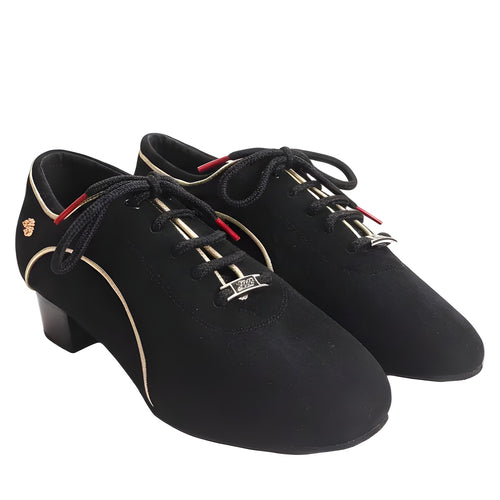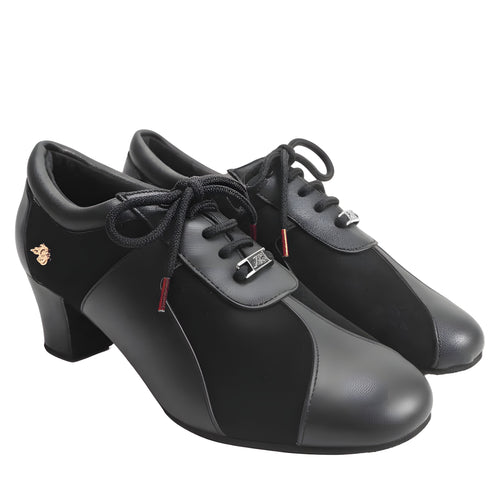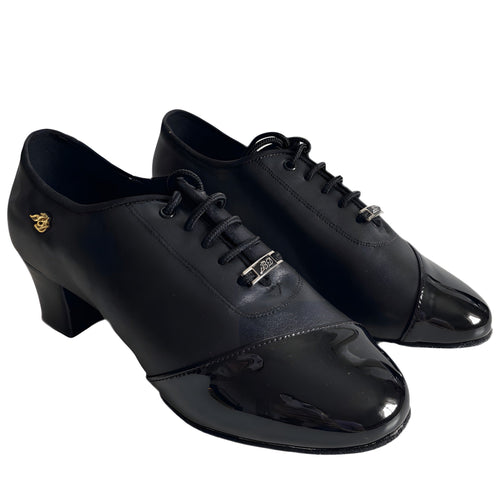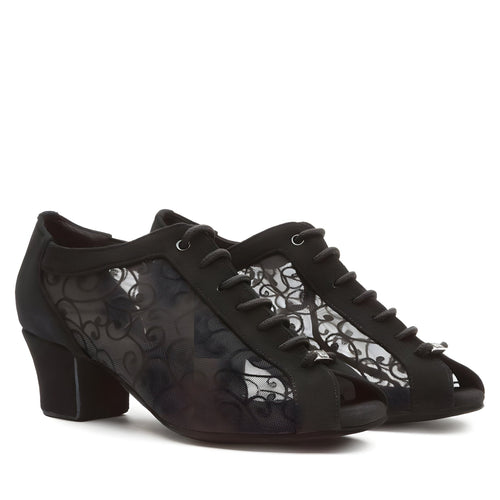

One of the first things dancers notice about proper dance shoes is the sole. Suede and leather soles behave differently on the floor, and the right choice depends on where and what you dance. Here’s the plain-language difference, from the team that fits dancers weekly in Ottawa and Montréal.

Suede (chamois) soles
The suede sole is what most ballroom, Latin and social dancers use. It gives that signature grip-with-slide on a wood or sprung studio floor — enough traction to feel secure, enough slide to spin and travel. The trade-offs: it’s indoor-only, and it needs an occasional brush with a wire suede brush to keep its nap and grip (see our care guide).

Leather soles
Leather soles slide more and grip less, which suits certain styles and smoother, faster movement. They’re durable and cope better with the odd harder surface, but on a slick floor they can feel too slippery for beginners. Some practice and men’s shoes use leather for exactly this reason.

Which should you choose?
For most ballroom, Latin, salsa and tango dancing on a studio floor, suede is the default — it’s what you’ll want the vast majority of the time. Consider leather only if you specifically need more slide, or often dance on surfaces where suede would wear quickly. If in doubt, go suede.

Looking after your soles
Never wear suede-soled shoes outdoors, keep them dry, and brush the sole when it feels slick. Full details are in our how to clean & care for dance shoes guide.
Shop and get fitted
Browse all dance shoes, check our fit & sizing guide, or book a fitting in Ottawa or Montréal and we’ll match the sole, size and heel to how you dance.
Written by Olga and the Wedance fitting team. Olga has fitted dancers for several years and coaches Anna, who fits at our Montréal showroom. We fit dancers face-to-face at our Ottawa and Montréal showrooms — so this guide reflects real fittings, not a spec sheet.