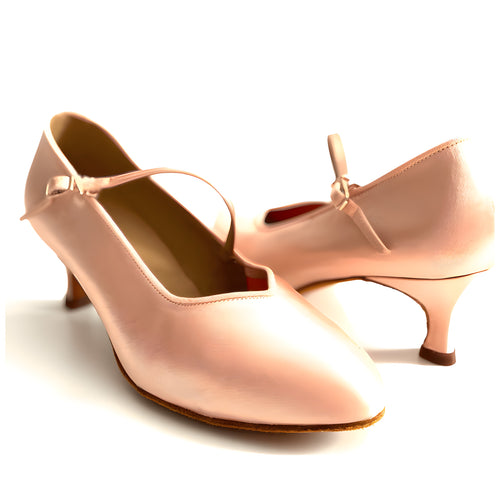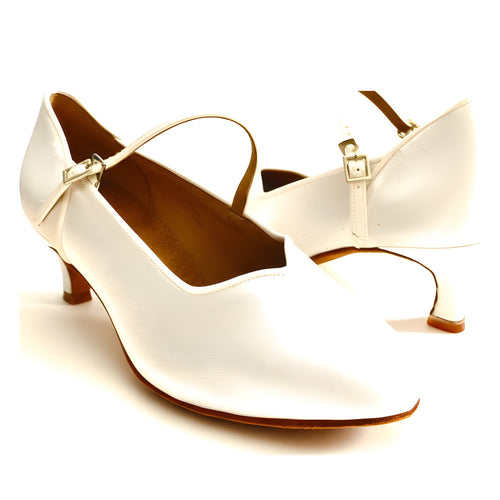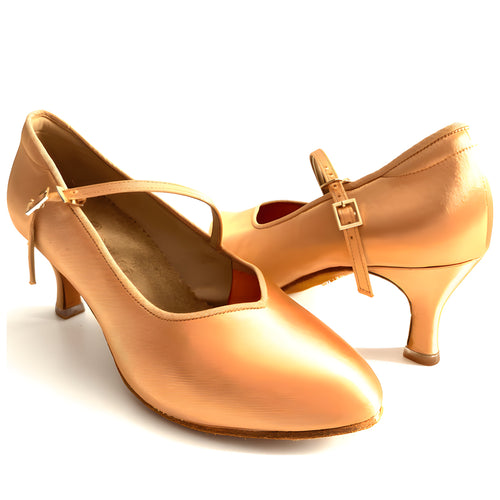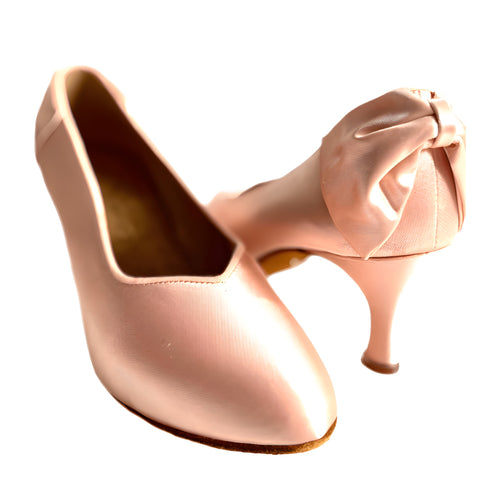

When you’re choosing dance shoes, the upper material — satin or leather — changes how they look, feel and last. (This is about the upper, not the sole — for that, see suede vs leather soles.) Here’s the plain-language difference, from the team that fits dancers weekly in Ottawa and Montréal.

Satin uppers
Satin is the classic competition and performance look — elegant, refined, and often dyeable to match a costume or wedding outfit. The trade-offs: satin marks more easily and gives less than leather, so getting the size right matters (see our fit & sizing guide). Keep it looking good with our care guide.

Leather uppers
Leather is durable, breathable and moulds to your foot over time, which makes it forgiving and comfortable — a great choice for practice, teaching, everyday wear and problem feet. It’s a little less formal than satin, but it lasts and lasts.

Which should you choose?
Choose satin for performance, competition, weddings or when you want the classic elegant look. Choose leather for durability, comfort and everyday practice, or if your feet need a material that gives. Many dancers own one of each — satin to perform in, leather to train in.

Remember the sole is a separate choice
Satin or leather refers to the upper; the sole is usually suede for grip on a studio floor. Don’t confuse the two — our suede vs leather soles guide covers that decision.
Shop and get fitted
Browse ballroom and Latin & salsa shoes in both materials, check the size chart, or book a fitting in Ottawa or Montréal.
Written by Olga and the Wedance fitting team. Olga has fitted dancers for several years and coaches Anna, who fits at our Montréal showroom. We fit dancers face-to-face at our Ottawa and Montréal showrooms — so this guide reflects real fittings, not a spec sheet.